Showing posts with label Real Estate. Show all posts

Saturday, January 5, 2013

Divorce and Your Home


During this difficult time, there are many questions you might be asking, including "Can I keep my house - what are my options?"   Let's break it down so you hopefully have one less thing to worry about! 

If I am the one to receive the home in the settlement, does it make sense?  Take into consideration home size, utilities, payments, family needs, etc.  You will now be entirely responsible for the house payment, upkeep and other related bills.  Your income will most likely be decreasing, so it is imperative that you be aware of what your expenses will be.

Will my spouse receive marital interest in the home?   If so, the equity in the home needs to be determined by an appraiser.  The appraised value - less the costs of selling (commissions and seller closing costs) equals equity to be split between the parties.  This is the amount you will be obligated to give to your ex-spouse.

With the divorce, your spouse may put a marital lien on the property or there may be a court ordered mandate for distribution of the equity.  This means that you have a specified amount of time to obtain the funds needed to give the ex-spouse their portion of the equity.   This can be done by cashing out the equity in the home with a new mortgage or selling the home.

If you choose to stay in the home, you have two financing options to pay your ex-spouse.  You can refinance your home to get cash out or you can obtain a new home equity loan.  This is where you will want the advice of a trusted mortgage professional. 

There are specific rules to qualifying for a new mortgage.  With good credit and income you can qualify on your own (child support and alimony can be counted if received for three months and likelihood of continuance for at least three years.) 

What if I am the one leaving the home?  It is important to know that even though the divorce decree awarded the home to your spouse, you are still obligated for this debt in the eyes of the mortgage company! 

Many people assume that by filing a quit claim deed removing themselves, they are no longer responsible for the mortgage.  A quit claim eliminates your name from the title of the property, not the mortgage.  The benefit of a quit claim deed is that if the one on title passes away, the property will go to their heirs rather than the ex-spouse.

How might it impact my credit - what can I do?  Unfortunately for many, divorce is a time of great financial hardship and credit challenges.  Because you are obligated on the mortgage until it is paid in full, it is imperative that the person responsible for the payment remains current.  One possibility you have is to do a name delete assumption.  If this is done as a none-qualifying assumption, the spouse not receiving the property can have their name removed from statements, but the financial obligation remains the same.  This process can also be used if you are staying in the property and changing back to your maiden name or a new married name.  There is a way to do a qualifying name delete assumption that would relieve the non-occupying spouse from their obligation, but you would have to check with your mortgage servicing company for their procedure and fees. 

What about if I want to go buy a home – am I still obligated because I am on the other loan?  Once you have your final divorce decree, a lender will look at your income and credit to qualify you on your own.  Again, in most situations, child support and alimony must have been received for three months and have at least a three year likelihood of continuance for this income to be used for qualifying.   If the divorce decree states that you are not obligated for the mortgage and the mortgage on the home awarded to your ex-spouse has not been delinquent during the last 12 months, you may be able to qualify without this obligation.

If you want to purchase a home prior to the divorce becoming final, you may be allowed to do this, but be aware that since you are in a community property state your spouse will have a marital interest.  Be very careful with this situation!  You will also have to qualify with the full debt from the current home because there is not a final divorce decree

Taking the time to talk with a mortgage lender before your divorce or before you decide to start looking at a new home can help eliminate much of the concerns and problems that surface in these situations.  Choosing to work with a Trusted Advisor as a mortgage lender is crucial to your financial well being.  Especially during this difficult time.

Take advantage of our FREE mortgage analysis and financial consultation.  Let us help you with all you homeownership needs.

Monday, May 28, 2012

Mortgage Market Guide Vol. 10 Issue 22


I sincerely hope you have been enjoying your complimentary subscription to the MORTGAGE MARKET GUIDE WEEKLY. As the Memorial Day holiday is being observed, the next full issue will arrive on Monday, June 4th. I wish you and your family a peaceful Memorial Day holiday, as we remember the sacrifices of all of our Armed Forces servicemen and women, past and present, who have worked so hard to protect our great country. And please share the important article below with your clients, friends, and family members so they can keep their personal information safe — beyond this holiday weekend.

The Mortgage Market Guide Weekly is the industry's leading publication of this type, and I'm pleased to provide this valuable resource to you. If you feel that any of your clients, friends, family members or associates would benefit from keeping up-to-date on market and economic trends with this easy-to-read format, please let me know, and I will be happy to add them free of charge. 

Monday, May 21, 2012

Mortgage Market Guide Vol. 10 Issue 21


Last Week in Review: There was more drama out of Europe, plus some important inflation news.

It's all Greek to me. And last week, news out of Europe dominated the headlines...impacting our markets and home loan rates. Read on for details.


Last week there was news that the European Central Bank (ECB) stopped providing funding to some Greek banks, adding to the drama in the region. ECB President Mario Draghi backed the move saying that the ECB will not compromise "the integrity of our balance sheet" to bail out Greek banks and the recapitalization effort must come from the Greek government themselves.


What will be made of Greece? Will there be a "Grexit," with the country exiting the Euro? What's more, Spain looks like it will be in a recession throughout 2013 and that country is drowning in debt with Bond yields now approaching very lofty levels. When there is this much risk out in the market, Traders seek a safe haven like the US Dollar and US Bonds...and the drama and risk in Europe benefitted our Bonds (including Mortgage Bonds, to which home loan rates are tied) last week.


Here at home, inflation as measured by the Consumer Price Index (CPI) came in at 2.3% year-over-year. Remember, inflation hurts the value of fixed investments like Bonds (thus, hurting home loan rates)...so inflation staying in check is crucial when it comes to home loan rates remaining near record best levels. And while the year-over-year CPI reading was the lowest since February 2011, it's important to realize that there is a negative correlation between inflation and what Treasuries are yielding...and this negative correlation can't last forever. Investors will not continue to "lose" money to inflation by holding Treasuries. Either inflation has to moderate a lot OR the Bond Market has to adjust for inflation with prices moving lower. This will result in home loan rates moving higher. 


The bottom line is that home loan rates remain near historic lows and now continues to be a great time to purchase or refinance a home. Let me know if I can answer any questions at all for you or your clients.


Forecast for the Week: Several important reports are ahead of the holiday weekend, with news on the housing market, durable goods, and consumer sentiment.

As you can see in the chart below, the drama in Europe helped Bonds and home loan rates reach record best levels. I'll be watching closely to see what happens this week.

Remember: Weak economic news normally causes money to flow out of Stocks and into Bonds, helping Bonds and home loan rates improve, while strong economic news normally has the opposite result. The chart below shows Mortgage Backed Securities (MBS), which are the type of Bond that home loan rates are based on
 Chart: Fannie Mae 3.5% Mortgage Bond (Friday May 18, 2012)


To go one step further – a red "candle" means that MBS worsened during the day, while a green "candle" means MBS improved during the day. Depending on how dramatic the changes were on any given day, this can cause rate changes throughout the day, as well as on the rate sheets we start with each morning.

This week's economic calendar is light, but there are still some important reports to watch:

  • Existing Home Sales and New Home Sales will be released on Tuesday and Wednesday, respectively. The data comes after last week's positive Housing Starts report.
  • Weekly Initial Jobless Claims will be released on Thursday as usual.
  • Also on Thursday we'll see the Durable Goods Report for April. This report measures orders for big ticket items that last for an extended time.
  • Consumer Sentiment rounds out the week and will be delivered on Friday.
In addition to those reports, the markets may be impacted by the upcoming holiday weekend. That's because the week leading up to Memorial Day weekend usually sees low trading volumes – and by Friday afternoon, trading desks have pretty much cleared out. When volumes are low, markets can easily see some big swings

When you see these Bond prices moving higher, it means home loan rates are improving – and when they are moving lower, home loan rates are getting worse.

Monday, May 14, 2012

Mortgage Market Guide Vol. 10 Issue 20


Last Week in Review: Bonds and home loan rates improved to record levels — find out why.

Survey says? Last week’s economic report calendar may have been light, but some important surveys revealed key data to note. Read on for the details...and how home loan rates fared.

As you can see in the chart, the National Association of Realtors (NAR) said that of the 146 Metro cities surveyed, home prices rose in 74 of them in Q1 2012. This is up from 29 cities that saw an increase in home prices in Q4 2011. In addition, the NAR also said that inventories for existing homes fell 22% since this time last year and are down 41% since the peak in mid-2007. While the housing market has a long way to go, this report was a nice step in the right direction.

There was also news from the National Federation of Independent Business, which said that its small business optimism index gained 2% in April as the survey revealed that companies have increased plans for hiring and investing in the future. While companies added new employees at a slower pace in April than in March, the index rose to 94.5 — the highest level since February of 2011. Overall, though, the report showed that our economy is improving but is still fragile. The state of our economy is part of the reason for the improvement in Bonds (and home loan rates, which are tied to Mortgage Bonds) of late.

Another big reason that Bonds and home loan rates have been improving is the fresh round of uncertainty out of Europe. France elected a new president, and this change of the guard represents the ninth EuroZone leader swap since the financial crisis began. Greece is also back in the news and their citizens are not taking to the austerity measures either. The New Democracy government, a pro-bailout party, is having trouble gathering the support to rule the government. This has sparked some safe haven trading into our Bonds, as investors see our Bonds as a safe place for their money.

The bottom line is that now continues to be a great time to purchase or refinance a home, as home loan rates remain near historic lows. Let me know if I can answer any questions at all for you or your clients.

Forecast for the Week: A full slate of economic reports is ahead, with news on inflation, the housing market, manufacturing and more.

As you can see in the chart below, Bonds and home loan rates reached record best levels last week. I’ll be monitoring the markets closely this week to see what happens next.

Chart: Fannie Mae 3.5% Mortgage Bond (Friday May 11, 2012)


With earnings season behind us, investors will be deluged with a slew of economic reports that will touch on many segments of the U.S. economy: 
  • Retail Sales will be released on Tuesday. This report gives the markets some insight to how consumer spending is holding up.
  • Also on Tuesday, the Consumer Price Index (CPI) will report on inflation at the consumer level. Last week’s Producer Price Index showed that inflation at the wholesale level has moderated, thanks to lower energy prices. Will CPI follow suit?
  • Manufacturing from the New York Empire and Philadelphia Fed Index will also be released Tuesday and Thursday, respectively.
  • Housing Starts and Building Permits data will be delivered on Wednesday.
  • Last — but not least — will be the Weekly Initial Jobless Claims numbers on Thursday. Last week's data was the lowest in a month.
In addition to those reports, European headlines will continue to dominate the news as the debt woes in that region plague the global economies. Also, the minutes from the Fed's April meeting of the Federal Open Market Committee will be released and this could move the markets. 

Remember: Weak economic news normally causes money to flow out of Stocks and into Bonds, helping Bonds and home loan rates improve, while strong economic news normally has the opposite result. The chart above shows Mortgage Backed Securities (MBS), which are the type of Bond that home loan rates are based on.


When you see these Bond prices moving higher, it means home loan rates are improving — and when they are moving lower, home loan rates are getting worse.


To go one step further — a red “candle” means that MBS worsened during the day, while a green “candle” means MBS improved during the day. Depending on how dramatic the changes were on any given day, this can cause rate changes throughout the day, as well as on the rate sheets we start with each morning. 


View: Did you know that bad news can be good for home loan rates? Be sure to read the article below.

Why Bad News Can Be Good for Home Loan Rates


It may seem odd that negative economic news can actually be good for home loan rates, but there's a pretty simple explanation for this phenomenon. Here’s a concise explanation you can share with your clients or you can use to gain a better understanding yourself.


First, we need to remember that big money managers who are in search of higher returns avoid holding onto cash by investing in both Stocks and Bonds.


Second, we need to dispel the myth about how home loan rates are determined. Despite what it may sound like in news stories covering the Federal Reserve’s meeting, home loan rates are based on the performance of mortgage-backed securities — which are a type of Bond.


When we put those two points together, we see that whenever the economy is on fire and there are good economic news reports, investors tend to put more money into Stocks. That’s because Stocks offer higher returns, even though they are generally more risky. To put money into Stocks, however, investors must remove some of their money from less-risky Bonds. The result is a decreased demand in Bonds that causes Bond prices to worsen, which causes home loan rates to go higher.


Inversely, when the economy is sluggish and economic reports are negative, money managers tend to take money out of higher-risk Stocks to put it into less-risky Bonds. As demand for Bonds increase, Bond pricing improves and home loan rates go down.


So while it may seem odd that home loan rates improve when economic news is sluggish, it actually makes sense when you look at the big picture.


If you have any questions about how the economic news is impacting home loan rates, please just call or email. I’m always happy to chat about what’s happening in the markets and what it means to home loan rates. 

Tuesday, May 8, 2012

It Pays to Have a Good Memory


It Pays to Have a Good Memory

In today’s housing market, it can pay (quite literally) to have a good memory. That’s because a good memory can help you stand out from the competition — especially when you’re networking and trying to remember names.

Unfortunately, many of us have trouble remembering the name of someone two minutes after we shake her hand. If that sounds like you, don’t worry… you’re not alone. It's actually an extremely common occurrence for many people. The good news is there are a number of simple, practical steps you can take to improve your memory now and long into the future. Here are just two of the great tips for proactively strengthening your memory.

Tip #1: Neurobic Exercise

You know all about the wonderful effects aerobic exercise has on the heart, but have you heard of neurobic exercise for the brain?

According to Lawrence Katz, co-author of Keep Your Brain Alive: 83 Neurobic Exercises, the best exercise for the brain is to force it to form "new patterns of association" or new pathways. In other words, challenge your brain every day. Take it off autopilot and make it relearn or create new associations with the most routine activities of your day.

Katz's book offers numerous examples of small changes you can make to activate your brain, including: brushing your teeth with the other hand; taking an alternative route to work; moving your wastebasket to the other side of your desk; closing your eyes while putting your key in and unlocking the front door; and changing where you and your family members sit at the dinner table.

So if you feel like your memory might be starting to slip a bit, try some of these simple neurobic exercises today!

Tip #2: Mnemonic Drilling

There are actually three steps or stages of memorization: acquisition, consolidation, and retrieval. That means, once we acquire new information, like someone's name for instance, the way in which we consolidate that data will directly affect how well we're able to retrieve it from memory.

Whether you're a visual or auditory type of learner, there are many mnemonic devices that can help you to better organize or consolidate the new information that you need to recall.

Here's an example of simple steps that might help:

First, associate the data you want to remember with common images. For instance, let's say you meet someone named Jennifer Green. Imagine Jennifer playing golf, or picture her wearing all green clothes, or imagine her face painted completely green.

Second, think of associations you can use to help you remember this person. For instance, link Jennifer to the quality that best fits her personality (use alliteration and rhymes whenever possible): Jolly Jennifer Green.

Finally, connect sound to your memory by saying the name aloud.

Do this regularly and, before you know it, you'll never forget anyone's name again! And that can give you a nice advantage in networking and communicating with clients! 

Mortgage Market Guide Vol. 10 Issue 19


Last Week in Review: The Jobs Report for April is in, but what did the news reveal about our economy?

Take this job and love it. And the Labor Department’s Jobs Report for April showed that fewer than expected people are able to do this, as fewer than expected jobs were created. Read on for details and what they mean for home loan rates.

The Jobs Report showed that 115,000 jobs were created in April, with 130,000 private sector jobs offsetting government job losses. This number was a disappointment and below expectations. The only silver lining in the report were upward revisions to the previous month's readings which added 53,000 more jobs than what was previously reported.

The unemployment rate dropped a tick to 8.1% — the lowest since January 2009. However, the decline was mainly due to the labor force shrinking by 300,000, rather than by robust job growth. And as expected, we are starting to hear more and more about the Labor Force Participation Rate (LFPR). The LFPR dropped to 63.6, the lowest ratio since December 1981. Why is this important? The LFPR gives us a clear read of who is working and who is not.  And if someone is not participating, then they are probably receiving some sort of social security or unemployment insurance. The bottom line is that it is tough to pay down debt when there are not enough people participating in the labor force. 

Overall the Jobs Report was underwhelming and, unfortunately, further accommodative monetary policy or even more Bond buying (known as Quantitative Easing or QE3) will have a very limited effect on job growth. What’s more, the debt drama in Europe continues to escalate, as both Italy and Germany reported higher than expected unemployment rates, while Spain has slipped into its second recession since the financial crisis.

The events in Europe and potential softening of our economy have resulted in home loan rates remaining near historic lows. That means now continues to be a great time to purchase or refinance a home. Let me know if I can answer any questions at all for you or your clients. 

Forecast for the Week: A quiet week is ahead, but an important inflation report will be released.

 As you can see in the chart below, Bonds and home loan rates reached record best levels after last week’s Jobs Report. I’ll be monitoring the markets closely this week to see what happens next.

Chart: Fannie Mae 3.5% Mortgage Bond (Friday May 04, 2012)


After two weeks featuring a slew of economic reports, this week's calendar is light. But that doesn’t mean there won’t be a battle for investing dollars in the Stock and Bond markets!
  • The first report won't be released until Thursday with the weekly Initial Jobless Claims report. Last week, claims fell by 27,000, which was the largest weekly decline since May 2011.  
  • On Friday, inflation at the wholesale level will be released in the form of the Producer Price Index (PPI). Last week it was reported that the year-over-year Core Personal Consumption Expenditures (PCE) rose to 2%, the high end of the Fed's range.
  • The last report on Friday will be the first reading on Consumer Sentiment for May.
With so few economic reports this week, market players will be focusing in on the ongoing debt crisis in Europe, earnings reports and how the $66 Billion in Treasury Notes and Bonds will be received. All three of those news items could move Bonds and home loan rates this week.


Remember: Weak economic news normally causes money to flow out of Stocks and into Bonds, helping Bonds and home loan rates improve, while strong economic news normally has the opposite result. The chart above shows Mortgage Backed Securities (MBS), which are the type of Bond that home loan rates are based on. 


When you see these Bond prices moving higher, it means home loan rates are improving — and when they are moving lower, home loan rates are getting worse.
To go one step further — a red “candle” means that MBS worsened during the day, while a green “candle” means MBS improved during the day. Depending on how dramatic the changes were on any given day, this can cause rate changes throughout the day, as well as on the rate sheets we start with each morning. 
 

Wednesday, May 2, 2012

Cinco de Mayo: The Story You May Not Know


Cinco de Mayo: The Story You May Not Know

In a few days, we’ll mark the celebration known as Cinco de Mayo. Although many people have heard of this celebration, most people don’t realize that the event being commemorated may have actually played an important role in shaping the United States that we know today.

Feel free to share the interesting facts below with clients and friends in the coming days! You may surprise them with what you’re about to read.

What Does Cinco de Mayo Commemorate?

Many people believe that Cinco de Mayo is the day that recognizes Mexico's independence from Spain. To set the record straight, that conquest happened on September 15th, 1810. Cinco de Mayo, on the other hand, celebrates an event that took place over 50 years later.

On May 5, 1862, the Mexican cavalry, under the command of Texas-born General Zaragosa, defeated the French at the battle at Puebla, a city 100 miles east of Mexico City.

The French army, having not suffered a defeat in nearly 50 years, landed in the port of Vera Cruz and headed toward the capital city with a specific mission. Fearless of any opponent, the French sought to overthrow the capitol and gain control of Mexico, even bringing along a Hapsburg prince to oversee the would-be empire.

Cinco de Mayo’s Connection to the United States

The goal of France's leader, Emperor Napoleon III, was to gain proximity to the US in hopes of supplying the Confederate Army in their fight against the North. He had a vested interest in sustaining the division within America.

To America's benefit, the undersized Mexican cavalry used their knowledge of the terrain to defeat the powerful French army. This victory enabled the northern states to build the greatest army in the world at that time.

Fourteen months later, the North soundly defeated the Confederate Army in the battle at Gettysburg, thus ending the civil war. Union troops were subsequently rushed to the Texas/Mexican border to help expel the French from Mexico.

For this reason, Cinco de Mayo is celebrated in both countries. More importantly, it's a great occasion to honor freedom and liberty.

Tuesday, May 1, 2012

Mortgage Market Guide Vol. 10 Issue 18


Last Week In Review: The Fed met, but was there mention of more Bond buying?

"I’m still standing – yeah, yeah, yeah." Elton John. And after last week’s Fed meeting, Bonds and home loan rates are still standing near record best levels. Read on for details.
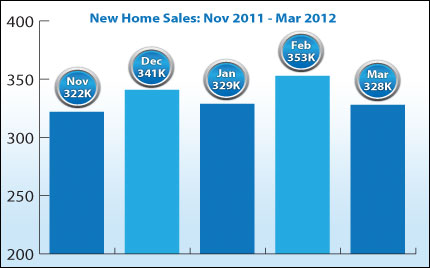
After last week’s regularly scheduled meeting of the Federal Open Market Committee (FOMC), Fed Chairman Ben Bernanke acknowledged that conditions in our economy are improving modestly, but he noted that the housing market remains depressed. One example of this is New Home Sales, which fell 7.1% in March to 328K units on an annual rate.


Bernanke also noted that inflation is higher in the short-run due to higher energy costs, but that the Fed expects prices to moderate and remain in check longer-term. Remember, inflation hurts the value of fixed investments like Bonds (including Mortgage Bonds, to which home loan rates are tied)...so inflation staying in check is crucial when it comes to home loan rates remaining near record best levels.


One important subject the Fed didn’t mention in their Policy Statement was another round of Bond buying to stimulate our economy (known as Quantitative Easing or QE3). This wasn’t much of a surprise because — after several moves to prop up the economy — the Fed must see where upcoming economic reports go before venturing to underwrite the economy further. If the housing market remains depressed and the economy doesn't pick up steam, QE3 could be a very real possibility.


And there was a bit of a sluggish read on our economy last Friday, after the Fed’s mid-week meeting. The advanced (first of three readings) of Gross Domestic Product (GDP) for the 1st Quarter of 2012 came in at 2.2%, well below expectations. This was also well below the 3% final 4th Quarter 2011 GDP reading. Within the report it showed that the personal consumption expenditure inflation reading rose at the fastest pace since the 2nd Quarter of 2011. This is definitely something the Fed is watching closely. 
As 2012 continues to unfold, inflation, the housing market, our sluggish economy, and our ever-growing debt are important issues that the Fed and our government need to address. Seeing the debt crisis in Europe escalate must put a sense of urgency on our government to reign in our annual budget deficit and overall debt. This mix of factors will continue to impact the direction in which Bonds and home loan rates move in the weeks ahead.


The good news is that now continues to be a great time to purchase or refinance a home, as home loan rates remain near historic lows. Let me know if I can answer any questions at all for you or your clients.


Forecast For The Week: A full slate of economic reports ahead, with news of inflation, manufacturing, and the job market.

As you can see in the chart below, Bonds and home loan rates continue to hover near record best levels. I’ll stay on top of this week’s news to monitor how Bonds and home loan rates are impacted.

Chart: Fannie Mae 3.5% Mortgage Bond (Friday Apr 27, 2012)


A slew of economic reports are set for release this week, and investors and traders will be watching the data closely for any signs of an economic slowdown:
  • Right off the bat on Monday the Personal Income and Spending data will be released along with the closely watched Core Personal Consumption Expenditure (PCE) report. The Core PCE is the Fed's favorite gauge of inflation and comes after Fed Chairman Ben Bernanke said last week that inflation in the short-term has been pressured higher by rising energy costs.      
  • In the manufacturing sector, the Chicago PMI will be released on Monday with the national ISM Index delivered on Tuesday. 
  • On Wednesday, the ADP Employment Report will be released ahead of the government's monthly Non-farm Payrolls and the Unemployment Rate on Friday.         
  • Initial Weekly Jobless Claims will be released on Thursday. The recent couple weeks of elevated Jobless Claims is disturbing…and if it continues, rest assured QE3 chatter will re-emerge.
Remember: Weak economic news normally causes money to flow out of Stocks and into Bonds, helping Bonds and home loan rates improve, while strong economic news normally has the opposite result. The chart above shows Mortgage Backed Securities (MBS), which are the type of Bond that home loan rates are based on. 


When you see these Bond prices moving higher, it means home loan rates are improving — and when they are moving lower, home loan rates are getting worse.


To go one step further — a red “candle” means that MBS worsened during the day, while a green “candle” means MBS improved during the day. Depending on how dramatic the changes were on any given day, this can cause rate changes throughout the day, as well as on the rate sheets we start with each morning.  

Monday, April 30, 2012

Fun Housing Facts


Fun Housing Facts

The United States Census Bureau recently released some fun facts related to housing across the country, based on data for 2010. Here are just a few highlights from the release that you may find interesting…and may want to pass on to others.

Heating Our Homes
  • 57 million = Number of houses heated by utility gas.
  • 2.2 million = Number of houses heated by wood.
  • 38,010 = Number of houses heated by solar energy.
From Home to Work
  • 25.3 minutes = Average time workers across the country spent getting from home to work.
  • 31.8 minutes = Longest commute time in the nation, which belonged to Maryland residents.
  • 16.1 minutes = Shortest commute time in the nation, which belonged to North Dakota residents.
Home Sweet Home
  • 2,392 square feet = Average size of a single-family house built in 2010. That number was down      a little from 2,438 square feet in 2009.
  • 131.7 million = Number of housing units counted in the 2010 Census. Compare that to 37.2 million in the first housing census, which was conducted in 1940!
Bonus Fact!

The first housing census in 1940 featured 31 housing questions - including some we may find odd today, such as whether the house had a radio…toilets or an outhouse…electric lighting…and running water.

Conversely, the 2010 census only included two housing questions: (1) whether the home was owned or rented and (2) whether the respondent sometimes lived or stayed somewhere else. The number of housing questions in the census has dropped because we now ask a number of housing questions in the American Community Survey, which is sent to about 3 million households nationwide every year.

Over the years, housing has really changed. But regardless of the time or location, one thing remains the same…there's no place like home!

Monday, April 23, 2012

Mortgage Market Guide Vol. 10 Issue 17


Last Week In Review: There was a mix of good, bad, and downright ugly news. Find out how new home loans responded.


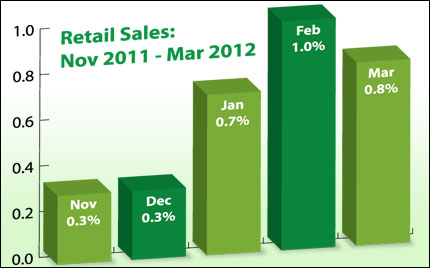
On the good side, Retail Sales in March rose by a nice 0.8%, as consumers bought all kinds of products across the board. And when stripping out autos, sales still grew. This adds to the increasing trend seen in January and February and is a good sign for our economy, as consumers don't spend when they aren't feeling optimistic about their financial situation.
"Bad news goes about in clogs, good news in stockinged feet." Welsh Proverb. And we certainly saw both good and bad news in the economic reports released last week. Here are the details...and what they mean for home loan rates.

But over in the manufacturing sector it was not as pretty a picture, as both the Empire State Manufacturing Index and the Philly Fed Index came in below expectations. This is largely being attributed to a global slowdown, and experts say that the outlook for our manufacturing remains positive…but just not accelerating at the present time. Things weren't as pretty in the housing sector either, as both Existing Home Sales and Housing Starts fell in March.

And things in the labor market were verging on ugly, as Initial Jobless Claims spiked sharply higher. The Labor Department reported 386,000 fresh Claims in the latest week, above the 375,000 that was expected...and well above the 350,000 range seen in recent weeks.

Also verging on ugly was news out of Europe. There is growing and very justified concern about Spain's ability to pay down debt, meet new budget deficit targets, and avoid a bailout or debt restructuring. The Spanish situation has prompted the G-20 (Finance Ministers and Central Bankers of the 20 largest economies) to urge the European Central Bank to do more to contain their debt crisis as it threatens global growth. And let's not forget that besides Spain, we still have France, Portugal, Ireland and Greece to deal with in future months and years.

So what does all of this mean for Bonds and home loan rates? There will likely be more safe haven trading into the relative safety of the US Dollar and US Bonds (which will benefit Mortgage Bonds, to which home loan rates are tied) as the uncertainty out of Europe escalates. And more bad economic reports here in the United States could add to this safe haven trading into our Bonds, just as more good economic news here would likely benefit Stocks at the expense of our Bonds and home loan rates.

This mix of factors will continue to impact the direction in which Bonds and home loan rates move in the weeks ahead. The takeaway is that home loan rates remain near historic lows and now continues to be a great time to purchase or refinance a home. Let me know if I can answer any questions at all for you or your clients.

Forecast For The Week: The Fed meets, plus there's news on consumer confidence, housing, the state of the economy and more.

As you can see in the chart below, the mix of news last week benefitted Bonds and home loan rates. I'll be watching closely to see what happens this week.
Chart: Fannie Mae 3.5% Mortgage Bond (Friday Apr 20, 2012)


The economic calendar this week will give the investor a broad view of the U.S. economy…but the Federal Open Market Committee (FOMC) meeting will be front and center in the minds of investors. Here's a break down of what to watch:

  • Consumer Confidence will be released on Tuesday…with Consumer Sentiment set to be delivered on Friday.
  • Also on Tuesday, New Home Sales for March will be released, followed by Pending Home Sales for March on Thursday.
  • On Wednesday, Durable Orders - which are products that are supposed to last at least three years - will be released.
  • Initial Weekly Jobless Claims will be released on Thursday. The number of new claims has been steadily rising in the past month, which is not a good sign for the labor markets. So all eyes will once again be on this report.
  • On Friday, the first reading on Gross Domestic Product (GDP) for the first quarter of 2012 will be announced.
Also on Friday, we'll see the Employment Cost Index, which measures the costs of hiring and paying the American workforce. Higher costs could lead to inflation pressures, which could push Bond prices lower and home loan rates higher.

In addition to those reports, this week's FOMC meeting will be closely watched by both the Bond and Stock markets for any clues on how the U.S. economy is holding up.

Remember: Weak economic news normally causes money to flow out of Stocks and into Bonds, helping Bonds and home loan rates improve, while strong economic news normally has the opposite result. The chart above shows Mortgage Backed Securities (MBS), which are the type of Bond that home loan rates are based on.

When you see these Bond prices moving higher, it means home loan rates are improving - and when they are moving lower, home loan rates are getting worse.

To go one step further - a red "candle" means that MBS worsened during the day, while a green "candle" means MBS improved during the day. Depending on how dramatic the changes were on any given day, this can cause rate changes throughout the day, as well as on the rate sheets we start with each morning.

Wednesday, April 18, 2012

Mortgage Market Guide Vol. 10 Issue 16

Last Week in Review: Inflation news was released...and home loan rates responded.

 "Wild thing! You make my heart sing!" The Troggs. And that song lyric is certainly an apt description for the volatility in the markets these days, as the ups and downs have given people things to both sing and scream about. Here's what happened last week...and how home loan rates were impacted.
Inflation news hit the wires, with reports on both the wholesale and consumer levels. The wholesale-measuring Producer Price Index (PPI) showed that prices remained mostly unchanged during March. Remember, inflation hurts the value of fixed investments like Bonds (including Mortgage Bonds, to which home loan rates are tied)...so the lack of inflation on the wholesale side was good news for Bonds and home loan rates. 

Also helping Bonds and home loan rates last week was the tame inflation data from the Consumer Price Index (CPI). The headline reading for March was right in line with estimates. When stripping out volatile food and energy, the Core CPI was also inline with estimates...but the year-over-year number was 2.3%, just slightly higher than the previous reading of 2.2%.  While this raises eyebrows a bit, the Fed is still reiterating that inflation remains subdued. That being said, if the Core CPI continues to rise...which is indicative of inflation and as you can see in the chart…Bonds and home loan rates will have a tough time improving much further, regardless of other factors.

One key factor to keep an eye on is the labor market, as Initial Jobless Claims increased 13,000 to 380,000 for the week ending April 7. This marks the highest level since January, and the second highest reading for 2012. The Fed has acknowledged that job creations are short of their goals. In fact, last week Federal Reserve Vice Chairman Janet Yellen said that weakness in housing, the European debt crisis, and government spending cuts are likely to slow the pace of recovery and expansion. She did state that the Fed has plenty of stimulus tools to use, if economic conditions warrant another round of quantitative easing.

The bottom line is that many factors will impact the direction in which Bonds and home loan rates move in the weeks ahead. The good news is that home loan rates remain near historic lows and now continues to be a great time to purchase or refinance a home. Let me know if I can answer any questions at all for you or your clients.

Forecast for the Week: Earnings season continues, plus look for reports on retail sales, manufacturing, housing and more.

 As you can see in the chart below, it's been a wild, volatile few weeks in the markets. I'll be monitoring all the news closely to see how the markets and home loan rates respond next.

Chart: Fannie Mae 3.5% Mortgage Bond (Friday Apr 13, 2012)


The calendar heats up this week with reports on sales, housing, jobless claims and manufacturing:
  • Right off the bat, Retail Sales will be reported on Monday - and investors will be able to gauge how consumer spending is holding up.
  • In manufacturing news, the Empire State Index out of New York and the Philadelphia Fed Index will be released on Monday and Thursday, respectively.
  • Housing will be in the news this week with Housing Starts and Building Permits for March being reported on Tuesday. Those reports will be followed by the Existing Home Sales report for March, which will be released on Thursday. 
  • The weekly Initial Jobless Claims report will be released on Thursday. The report released last week showed that jobless claims rose to their highest level since the week ending January 28. So the markets will be watching this week's release!
In addition to those reports, Corporate Earnings reports may influence the Stock markets - and as we know, the Bond markets usually move in the opposite direction.

Remember: Weak economic news normally causes money to flow out of Stocks and into Bonds, helping Bonds and home loan rates improve, while strong economic news normally has the opposite result. The chart above shows Mortgage Backed Securities (MBS), which are the type of Bond that home loan rates are based on.

When you see these Bond prices moving higher, it means home loan rates are improving - and when they are moving lower, home loan rates are getting worse.

To go one step further - a red "candle" means that MBS worsened during the day, while a green "candle" means MBS improved during the day. Depending on how dramatic the changes were on any given day, this can cause rate changes throughout the day, as well as on the rate sheets we start with each morning.

View: Have you ever needed to read an important text for work while you were driving? Now there’s an app for that.

No More Texting and Driving…There's an App for That!

A study by the National Highway Traffic Safety Administration found that distracted driving was the leading cause in nearly 450,000 accidents and more than 5,000 highway deaths.

Unfortunately, one of the most distracting elements for drivers today is text-messaging technology. The good news is that technology can also help solve this problem. Services - like Drivesafe.ly - have sprung up that eliminate the need to read text messages AND eliminate the need to respond. That's good news regardless of whether you're receiving personal or business text messages.

Here's how it works...You download an application to your phone. Then, before you get in your car to drive, you simply turn the application on. When you receive a text message, the application actually reads it to you…automatically…and out loud. So there's no need to take your eyes off the road.

Better still... the application automatically sends a reply message stating that you are driving and will respond as soon as you reach a destination that allows you to safely reply.

The application can be used on a variety of phones and there are even different plans - including a free version of DriveSafe.ly as well as family and business plans.

If you receive a lot of text messages while driving, this could be one of the most important safety steps you do this year. Take a few minutes to check it out.

After all, this simple application could save your life or the life of someone you know. 

Economic Calendar for the Week of April 16 - April 20


As your mortgage professional, I am sending you the MMG WEEKLY because I am committed to keeping you updated on the economic events that impact interest rates and how they may affect you.

Tuesday, April 10, 2012

Mortgage Market Guide Vol. 10 Issue 15

Last Week in Review: The Jobs Report for March was released on Friday, but was it “Good” news?

Take this job and love it. And that's something that fewer than expected people are doing, according to last Friday's disappointing Jobs report. Here are the details...and what they mean for home loan rates. 
Last week's Jobs Report for March showed that 120,000 jobs were created, with 121,000 private gains offsetting modest government jobs losses. This was an utter disappointment, as expectations were for something north of 200,000 job creations.

The unemployment rate declined to 8.2%. While any decline in unemployment is good news, the figure does need to be taken with a grain of salt - especially in light of the significant headline jobs creation miss. The reason why: the Labor Force Participation Rate (LFPR), which removes some of the guesstimating and adjustments of the unemployment rate. That number (currently at a 30-year low) is a concern because if the LFPR continues to decline, it means we are seeing a smaller ratio of people working against the overall population. This will be another headwind to our already debt-laden government. 

While the Jobs Report was disappointing news for our economic recovery, Bonds (which thrive on weak economic news) improved on the news, including Mortgage Bonds, to which home loan rates are tied. And of course, the ugly headline jobs creation reading also renewed the talk of another round of Bond buying (Quantitative Easing or QE3)…even though the minutes from the March 13th Fed Meeting suggested there would be no QE3 unless the economy falters.

In addition, Bonds and home loan rates benefitted from the continuing debt rumblings in Europe. Not only has manufacturing there fallen for seven straight months, but Portuguese banks will unlikely meet recapitalization goals for 2012. Spain also has huge banking problems and will be in a recession this year and likely next year; plus Italy, Greece and Ireland are troubled as well. The debt in Europe is only becoming larger - and countries are contracting, while trying to cut spending. Bonds and home loan rates could continue to benefit if investors move their money into what is seen as the safe haven of our Bond Market.

Many factors will continue to impact the direction in which Bonds and home loan rates move in the coming weeks and months. The bottom line is that now continues to be a great time to purchase or refinance a home, as home loan rates still remain near historic lows. Let me know if I can answer any questions at all for you or your clients.

Forecast for the Week: Two important inflation reports are ahead. Plus earnings season begins.

As you can see in the chart below, Bonds and home loan rates benefitted from the disappointing Jobs Report. I'll be watching the news closely to see which way they move next.

Chart: Fannie Mae 3.5% Mortgage Bond (Friday Apr 06, 2012)


The markets will be open the entire week, despite the Easter and Passover holidays…and two reports stand out:
  • The economic calendar is light this week, but investors will be closely watching the Producer Price Index on Thursday and the Consumer Price Index on FridayHigher oil prices have fanned the flames for higher inflation in the short term says Fed Chairman Ben Bernanke…but in the longer term, it remains subdued.        
  • Initial Weekly Jobless Claims will be released on Thursday. Jobless claims fell to their lowest level in four years last week to 357,000.
  • On Friday the first reading of April Consumer Sentiment will be released.
In addition to those reports, corporate earnings will be in the news this week. Earnings reports are closely watched by investors around the globe. If the tone is positive, there could be a shift back into the Stock markets from the Bond markets, which in turn could push home loan rates higher. On the flipside, if earnings come in below expectations, Stocks could fall while Bonds could rise, in turn pushing home loan rates lower.

Remember: Weak economic news normally causes money to flow out of Stocks and into Bonds, helping Bonds and home loan rates improve, while strong economic news normally has the opposite result. The chart above shows Mortgage Backed Securities (MBS), which are the type of Bond that home loan rates are based on. 

When you see these Bond prices moving higher, it means home loan rates are improving - and when they are moving lower, home loan rates are getting worse.  

To go one step further - a red "candle" means that MBS worsened during the day, while a green "candle" means MBS improved during the day. Depending on how dramatic the changes were on any given day, this can cause rate changes throughout the day, as well as on the rate sheets we start with each morning.  

View: Whether you’re traveling for business or pleasure, you never want to overpay for your hotel. Check out the article below for an important money-saving tip.

An Easy Way to Get a Refund if Your Hotel Price Drops

When you reserve a room through Tingo, you get money back if the price drops. 
By Cameron Huddleston, Kiplinger.com

What if you found out that the hotel room you booked was $50 cheaper when you checked in? How about $100 less -- or maybe even $500?

Hotels lower their rates more often than you might suspect, and a new Web site is helping travelers cash in on those price drops. Launched in March by Smarter Travel Media (a TripAdvisor company), Tingo automatically rebooks your room at the lower rate if the hotel drops its price. Then you'll get a refund for the difference.

Americans could have saved nearly $314 million in 2011 if they had taken advantage of these price drops, according to data collected by Tingo. The average price drop is $35, but it can be much more. For example, the price on a two-night stay at the Wynn Las Vegas booked January 27 had dropped $519 by February 23.

To take advantage of Tingo's price-drop refunds, you have to book at a hotel designated as "Money Back." But that doesn't mean you're limited to just a few hotels. Tingo's worldwide hotel inventory is powered by Expedia, and more than 95% of the hotels offer the opportunity for refunds.

After you book a room, Tingo will track your rate and send you an e-mail if the hotel lowers the price for any component of your stay. You'll get a new confirmation number, and your refund will appear on your credit card after you check out. Tingo does not charge any fees for rebooking your room.

Reprinted with permission. All Contents ©2012 The Kiplinger Washington Editors. Kiplinger.com 

Economic Calendar for the Week of April 09 - April 13


As your mortgage professional, I am sending you the MMG WEEKLY because I am committed to keeping you updated on the economic events that impact interest rates and how they may affect you.